Plastic Culture
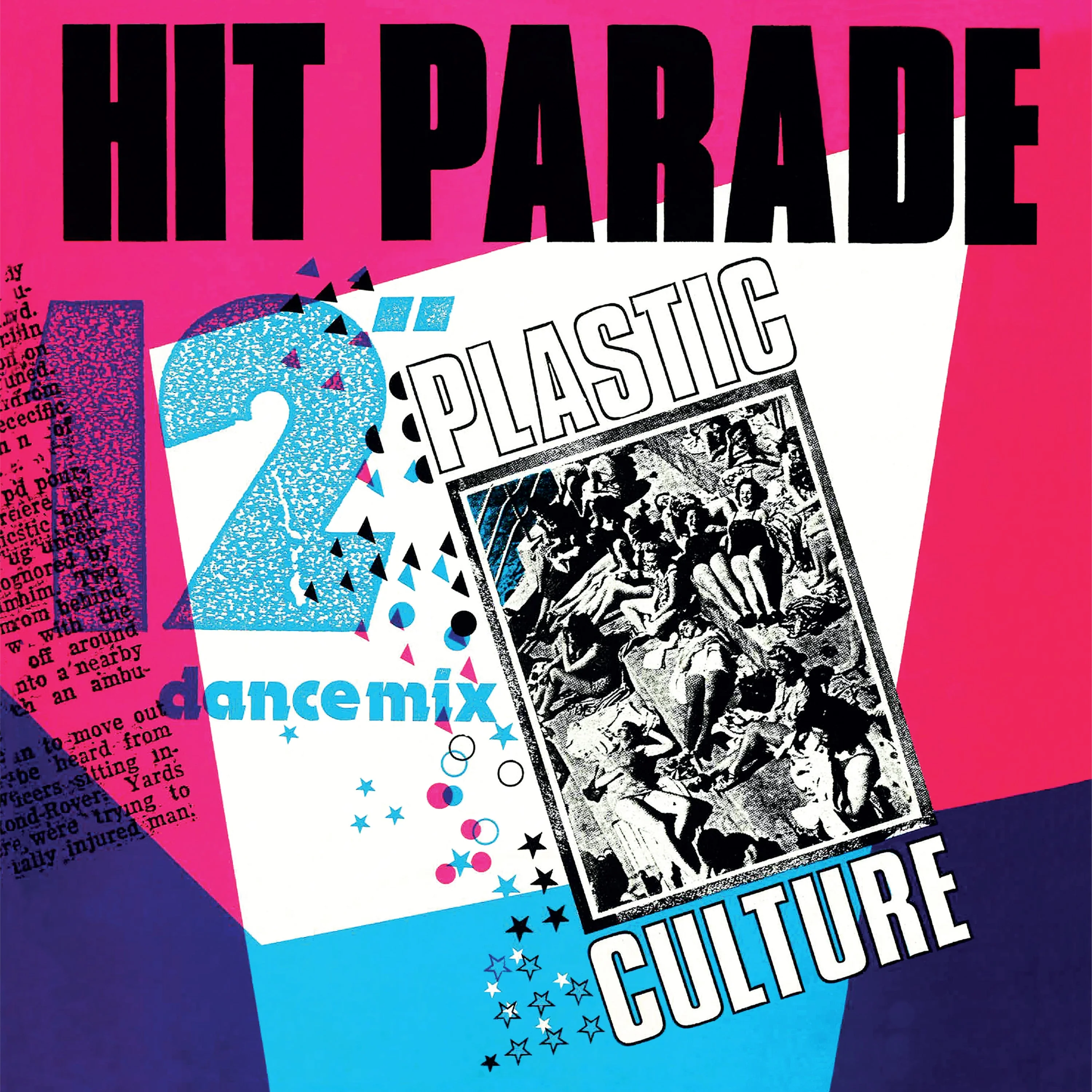
Punk pioneers Crass continue their vinyl reissue series, re-pressing their limited releases by adjacent artists through Crass Records, in association with One Little Independent. The series, including over twenty bands and solo artists recorded at the legendary Southern Studios and produced by Penny Rimbaud, continues with two more historic pieces from the Crass Records catalogue; ‘Multi-Death Corporations’ by MDC and ‘Plastic Culture’ by Hit Parade.
Hit Parade was a one-man anarchist band, the brainchild of Dave Hyndman (aka P. Checkoff and Rik O’che) a member of the Anarchist Collective in Belfast. Being a left-wing socialist, Checkoff’s songs were highly political by nature and concentrated on life in Northern Ireland. Subject matter ranged from the evils of television to H Blocks; the RUC to housing problems, and of course unemployment.
Penny continues; “Hit Parade was one troubled man’s attempt to deal with and describe the ‘troubles’ that surrounded him in Belfast where he lived with family, friends and comrades. In the seventies and eighties, divided Ireland was never far from the distortions of the UK’s daily headlines, all of which toeing the predictable Protestant party line. Meanwhile, Hit Parade had to suffer the daily indignities of military oppression and religious bigotry. Shouting out from a wilderness of human stupidity, Hit Parade looked to put the record straight from the trenches; one man’s voice touching the multitude. Listen and learn. It’s still going on and on and on…”
Penny finally notes that “Our (Crass’) interest was never in personalities, profits or power, and neither did we have time for reformist liberals. Our position was solidly revolutionary; we took no prisoners. Ours wasn’t a show, it was a battle, not a living, but a lifestyle, a lifestyle with a difference – rather than looking only to ourselves, we sought to share our gains. I feel that this willingness added great strength to the form of anarchism that we practiced both on stage and out on the street.”
In giving a platform to an impressive array of other bands, Crass Records broadened the front of what popularly became known as anarcho-punk. Not, it must be said, a moniker that Crass themselves much favoured. In this respect, Crass’ classic line, “There is no authority but yourself”, makes its point. Crass sought to empower others, and the output of Crass Records does much to confirm this, while ‘2 By 2 And Back Again’ seems to nail it – “get out of your own way, we’re all in this together”.
Product Information
Product Information
Shipping & Returns
Shipping & Returns
Plastic Culture
Plastic Culture
Punk pioneers Crass continue their vinyl reissue series, re-pressing their limited releases by adjacent artists through Crass Records, in association with One Little Independent. The series, including over twenty bands and solo artists recorded at the legendary Southern Studios and produced by Penny Rimbaud, continues with two more historic pieces from the Crass Records catalogue; ‘Multi-Death Corporations’ by MDC and ‘Plastic Culture’ by Hit Parade.
Hit Parade was a one-man anarchist band, the brainchild of Dave Hyndman (aka P. Checkoff and Rik O’che) a member of the Anarchist Collective in Belfast. Being a left-wing socialist, Checkoff’s songs were highly political by nature and concentrated on life in Northern Ireland. Subject matter ranged from the evils of television to H Blocks; the RUC to housing problems, and of course unemployment.
Penny continues; “Hit Parade was one troubled man’s attempt to deal with and describe the ‘troubles’ that surrounded him in Belfast where he lived with family, friends and comrades. In the seventies and eighties, divided Ireland was never far from the distortions of the UK’s daily headlines, all of which toeing the predictable Protestant party line. Meanwhile, Hit Parade had to suffer the daily indignities of military oppression and religious bigotry. Shouting out from a wilderness of human stupidity, Hit Parade looked to put the record straight from the trenches; one man’s voice touching the multitude. Listen and learn. It’s still going on and on and on…”
Penny finally notes that “Our (Crass’) interest was never in personalities, profits or power, and neither did we have time for reformist liberals. Our position was solidly revolutionary; we took no prisoners. Ours wasn’t a show, it was a battle, not a living, but a lifestyle, a lifestyle with a difference – rather than looking only to ourselves, we sought to share our gains. I feel that this willingness added great strength to the form of anarchism that we practiced both on stage and out on the street.”
In giving a platform to an impressive array of other bands, Crass Records broadened the front of what popularly became known as anarcho-punk. Not, it must be said, a moniker that Crass themselves much favoured. In this respect, Crass’ classic line, “There is no authority but yourself”, makes its point. Crass sought to empower others, and the output of Crass Records does much to confirm this, while ‘2 By 2 And Back Again’ seems to nail it – “get out of your own way, we’re all in this together”.
Original: $40.03
-65%$40.03
$14.01Product Information
Product Information
Shipping & Returns
Shipping & Returns
Description
Punk pioneers Crass continue their vinyl reissue series, re-pressing their limited releases by adjacent artists through Crass Records, in association with One Little Independent. The series, including over twenty bands and solo artists recorded at the legendary Southern Studios and produced by Penny Rimbaud, continues with two more historic pieces from the Crass Records catalogue; ‘Multi-Death Corporations’ by MDC and ‘Plastic Culture’ by Hit Parade.
Hit Parade was a one-man anarchist band, the brainchild of Dave Hyndman (aka P. Checkoff and Rik O’che) a member of the Anarchist Collective in Belfast. Being a left-wing socialist, Checkoff’s songs were highly political by nature and concentrated on life in Northern Ireland. Subject matter ranged from the evils of television to H Blocks; the RUC to housing problems, and of course unemployment.
Penny continues; “Hit Parade was one troubled man’s attempt to deal with and describe the ‘troubles’ that surrounded him in Belfast where he lived with family, friends and comrades. In the seventies and eighties, divided Ireland was never far from the distortions of the UK’s daily headlines, all of which toeing the predictable Protestant party line. Meanwhile, Hit Parade had to suffer the daily indignities of military oppression and religious bigotry. Shouting out from a wilderness of human stupidity, Hit Parade looked to put the record straight from the trenches; one man’s voice touching the multitude. Listen and learn. It’s still going on and on and on…”
Penny finally notes that “Our (Crass’) interest was never in personalities, profits or power, and neither did we have time for reformist liberals. Our position was solidly revolutionary; we took no prisoners. Ours wasn’t a show, it was a battle, not a living, but a lifestyle, a lifestyle with a difference – rather than looking only to ourselves, we sought to share our gains. I feel that this willingness added great strength to the form of anarchism that we practiced both on stage and out on the street.”
In giving a platform to an impressive array of other bands, Crass Records broadened the front of what popularly became known as anarcho-punk. Not, it must be said, a moniker that Crass themselves much favoured. In this respect, Crass’ classic line, “There is no authority but yourself”, makes its point. Crass sought to empower others, and the output of Crass Records does much to confirm this, while ‘2 By 2 And Back Again’ seems to nail it – “get out of your own way, we’re all in this together”.